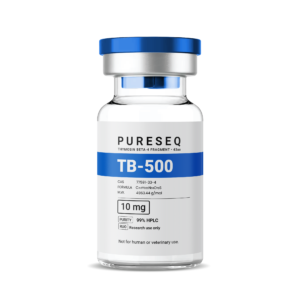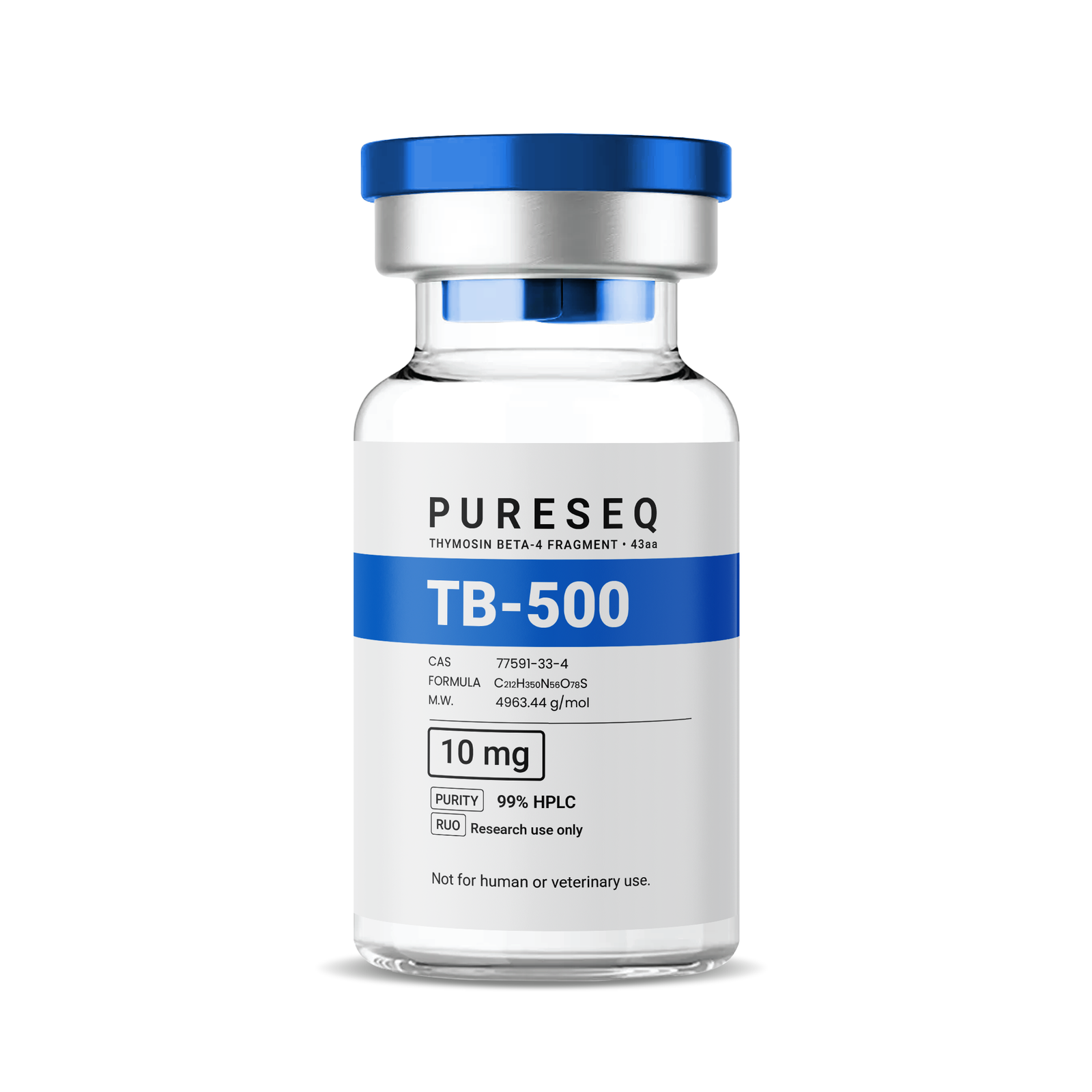
TB- 500 10mg

Body Protective Compound 10mg 

FOR RESEARCH USE ONLY 

TB-500 is a synthetic analogue of Thymosin Beta-4, a naturally occurring 43-amino acid peptide found in virtually all human and animal cells. Extensively studied for its regenerative and anti-inflammatory properties across muscle, tendon, ligament, and cardiovascular tissue.

Quantity
Price
<1
 34.90
1 - 2
 34.90 / vial
3 - 4
 31.41 / vial
5 - 9
 29.66 / vial
10+
 27.92 / vial
× TB- 500 10mg
Category:

>98%

Purity HPLC

COA

Every batch

EU

Fulfilment

Discreet

Shipping

Overview

TB-500 corresponds to the active region of Thymosin Beta-4 (AcSDKPDMAEIEKFDKSKLKKTETQ), the fragment responsible for the majority of its biological activity. It plays a central role in actin regulation, cell migration, and tissue repair, making it one of the most studied peptides in regenerative research.

Research has focused on its ability to promote angiogenesis, accelerate wound healing, reduce inflammation, and support recovery from both acute and chronic tissue injury. TB-500 has demonstrated systemic effects following administration, meaning its regenerative activity is not limited to the site of application.

Unlike many repair-focused peptides, TB-500 also demonstrates meaningful effects on cardiac tissue and the central nervous system, with studies documenting neurogenesis and cardiac repair following injury.

Key research areas include:
– Muscle and soft tissue repair
– Tendon and ligament healing
– Angiogenesis and vascular repair
– Anti-inflammatory activity
– Cardiac tissue regeneration
– Neurogenesis following CNS injury

RESEARCH & MECHANISM
      1. Actin Regulation & Cell Migration
        TB-500’s primary mechanism involves binding to G-actin, sequestering it and promoting cell migration — a critical step in tissue repair. This actin-regulatory activity underlies many of its downstream regenerative effects across tissue types.
      2. Angiogenesis
        Studies have demonstrated TB-500’s ability to promote formation of new blood vessels through upregulation of vascular endothelial growth factor (VEGF) receptors, improving blood supply to damaged tissue and accelerating the healing cascade.
      3. Muscle & Soft Tissue Repair
        Animal studies have documented accelerated recovery from muscle injury, reduced fibrosis, and improved functional outcomes following TB-500 administration. Its effects on satellite cell activation support muscle regeneration at the cellular level.
      4. Anti-Inflammatory Activity
        TB-500 consistently reduces inflammatory markers across tissue types, modulating the local inflammatory environment to support repair without suppressing the immune response entirely.
      5. Cardiac Regeneration
        Research has documented TB-500’s ability to stimulate cardiac stem cell migration and differentiation following myocardial infarction in animal models, representing a unique area of study among repair peptides.

      Key References:
      – Goldstein AL et al. Thymosin beta-4: a multi-functional regenerative peptide. Expert Opin Biol Ther. 2012.
      – Smart N et al. Thymosin beta-4 induces adult epicardial progenitor mobilisation. Nature. 2007.
      – Philp D et al. Thymosin beta-4 and the heart. Ann N Y Acad Sci. 2012.

SPECIFICATIONS
ParameterDetail
PeptideTB-500 (Thymosin Beta-4 Fragment)
SequenceAc-SDKPDMAEIEKFDKSKLKKTETQ
Molecular Weight4963.44 g/mol
CAS Number77591-33-4
AppearanceWhite lyophilised powder
Purity>99% (HPLC)
Vial Size10mg
Storage-20°C, protect from light and moisture
ReconstitutionBacteriostatic water or sterile saline
Shelf Life24 months (lyophilised) / 30 days (reconstituted, refrigerated)
FormatLyophilised powder, single-use research vial


DISCLAIMER

For research purposes only. Not for human or veterinary use.

>98%

Purity HPLC

COA

Every batch

EU

Fulfilment

Discreet

Shipping

Overview

TB-500 corresponds to the active region of Thymosin Beta-4 (AcSDKPDMAEIEKFDKSKLKKTETQ), the fragment responsible for the majority of its biological activity. It plays a central role in actin regulation, cell migration, and tissue repair, making it one of the most studied peptides in regenerative research.

Research has focused on its ability to promote angiogenesis, accelerate wound healing, reduce inflammation, and support recovery from both acute and chronic tissue injury. TB-500 has demonstrated systemic effects following administration, meaning its regenerative activity is not limited to the site of application.

Unlike many repair-focused peptides, TB-500 also demonstrates meaningful effects on cardiac tissue and the central nervous system, with studies documenting neurogenesis and cardiac repair following injury.

Key research areas include:
– Muscle and soft tissue repair
– Tendon and ligament healing
– Angiogenesis and vascular repair
– Anti-inflammatory activity
– Cardiac tissue regeneration
– Neurogenesis following CNS injury

RESEARCH & MECHANISM
      1. Actin Regulation & Cell Migration
        TB-500’s primary mechanism involves binding to G-actin, sequestering it and promoting cell migration — a critical step in tissue repair. This actin-regulatory activity underlies many of its downstream regenerative effects across tissue types.
      2. Angiogenesis
        Studies have demonstrated TB-500’s ability to promote formation of new blood vessels through upregulation of vascular endothelial growth factor (VEGF) receptors, improving blood supply to damaged tissue and accelerating the healing cascade.
      3. Muscle & Soft Tissue Repair
        Animal studies have documented accelerated recovery from muscle injury, reduced fibrosis, and improved functional outcomes following TB-500 administration. Its effects on satellite cell activation support muscle regeneration at the cellular level.
      4. Anti-Inflammatory Activity
        TB-500 consistently reduces inflammatory markers across tissue types, modulating the local inflammatory environment to support repair without suppressing the immune response entirely.
      5. Cardiac Regeneration
        Research has documented TB-500’s ability to stimulate cardiac stem cell migration and differentiation following myocardial infarction in animal models, representing a unique area of study among repair peptides.

      Key References:
      – Goldstein AL et al. Thymosin beta-4: a multi-functional regenerative peptide. Expert Opin Biol Ther. 2012.
      – Smart N et al. Thymosin beta-4 induces adult epicardial progenitor mobilisation. Nature. 2007.
      – Philp D et al. Thymosin beta-4 and the heart. Ann N Y Acad Sci. 2012.

SPECIFICATIONS
ParameterDetail
PeptideTB-500 (Thymosin Beta-4 Fragment)
SequenceAc-SDKPDMAEIEKFDKSKLKKTETQ
Molecular Weight4963.44 g/mol
CAS Number77591-33-4
AppearanceWhite lyophilised powder
Purity>99% (HPLC)
Vial Size10mg
Storage-20°C, protect from light and moisture
ReconstitutionBacteriostatic water or sterile saline
Shelf Life24 months (lyophilised) / 30 days (reconstituted, refrigerated)
FormatLyophilised powder, single-use research vial


DISCLAIMER

For research purposes only. Not for human or veterinary use.

>98%

Purity HPLC

COA

Every batch

EU

Fulfilment

Discreet

Shipping

Overview

TB-500 corresponds to the active region of Thymosin Beta-4 (AcSDKPDMAEIEKFDKSKLKKTETQ), the fragment responsible for the majority of its biological activity. It plays a central role in actin regulation, cell migration, and tissue repair, making it one of the most studied peptides in regenerative research.

Research has focused on its ability to promote angiogenesis, accelerate wound healing, reduce inflammation, and support recovery from both acute and chronic tissue injury. TB-500 has demonstrated systemic effects following administration, meaning its regenerative activity is not limited to the site of application.

Unlike many repair-focused peptides, TB-500 also demonstrates meaningful effects on cardiac tissue and the central nervous system, with studies documenting neurogenesis and cardiac repair following injury.

Key research areas include:
– Muscle and soft tissue repair
– Tendon and ligament healing
– Angiogenesis and vascular repair
– Anti-inflammatory activity
– Cardiac tissue regeneration
– Neurogenesis following CNS injury

RESEARCH & MECHANISM
      1. Actin Regulation & Cell Migration
        TB-500’s primary mechanism involves binding to G-actin, sequestering it and promoting cell migration — a critical step in tissue repair. This actin-regulatory activity underlies many of its downstream regenerative effects across tissue types.
      2. Angiogenesis
        Studies have demonstrated TB-500’s ability to promote formation of new blood vessels through upregulation of vascular endothelial growth factor (VEGF) receptors, improving blood supply to damaged tissue and accelerating the healing cascade.
      3. Muscle & Soft Tissue Repair
        Animal studies have documented accelerated recovery from muscle injury, reduced fibrosis, and improved functional outcomes following TB-500 administration. Its effects on satellite cell activation support muscle regeneration at the cellular level.
      4. Anti-Inflammatory Activity
        TB-500 consistently reduces inflammatory markers across tissue types, modulating the local inflammatory environment to support repair without suppressing the immune response entirely.
      5. Cardiac Regeneration
        Research has documented TB-500’s ability to stimulate cardiac stem cell migration and differentiation following myocardial infarction in animal models, representing a unique area of study among repair peptides.

      Key References:
      – Goldstein AL et al. Thymosin beta-4: a multi-functional regenerative peptide. Expert Opin Biol Ther. 2012.
      – Smart N et al. Thymosin beta-4 induces adult epicardial progenitor mobilisation. Nature. 2007.
      – Philp D et al. Thymosin beta-4 and the heart. Ann N Y Acad Sci. 2012.

SPECIFICATIONS
ParameterDetail
PeptideTB-500 (Thymosin Beta-4 Fragment)
SequenceAc-SDKPDMAEIEKFDKSKLKKTETQ
Molecular Weight4963.44 g/mol
CAS Number77591-33-4
AppearanceWhite lyophilised powder
Purity>99% (HPLC)
Vial Size10mg
Storage-20°C, protect from light and moisture
ReconstitutionBacteriostatic water or sterile saline
Shelf Life24 months (lyophilised) / 30 days (reconstituted, refrigerated)
FormatLyophilised powder, single-use research vial


DISCLAIMER

For research purposes only. Not for human or veterinary use.

>98%

Purity HPLC

COA

Every batch

EU

Fulfilment

Discreet

Shipping

Overview

TB-500 corresponds to the active region of Thymosin Beta-4 (AcSDKPDMAEIEKFDKSKLKKTETQ), the fragment responsible for the majority of its biological activity. It plays a central role in actin regulation, cell migration, and tissue repair, making it one of the most studied peptides in regenerative research.

Research has focused on its ability to promote angiogenesis, accelerate wound healing, reduce inflammation, and support recovery from both acute and chronic tissue injury. TB-500 has demonstrated systemic effects following administration, meaning its regenerative activity is not limited to the site of application.

Unlike many repair-focused peptides, TB-500 also demonstrates meaningful effects on cardiac tissue and the central nervous system, with studies documenting neurogenesis and cardiac repair following injury.

Key research areas include:
– Muscle and soft tissue repair
– Tendon and ligament healing
– Angiogenesis and vascular repair
– Anti-inflammatory activity
– Cardiac tissue regeneration
– Neurogenesis following CNS injury

RESEARCH & MECHANISM
      1. Actin Regulation & Cell Migration
        TB-500’s primary mechanism involves binding to G-actin, sequestering it and promoting cell migration — a critical step in tissue repair. This actin-regulatory activity underlies many of its downstream regenerative effects across tissue types.
      2. Angiogenesis
        Studies have demonstrated TB-500’s ability to promote formation of new blood vessels through upregulation of vascular endothelial growth factor (VEGF) receptors, improving blood supply to damaged tissue and accelerating the healing cascade.
      3. Muscle & Soft Tissue Repair
        Animal studies have documented accelerated recovery from muscle injury, reduced fibrosis, and improved functional outcomes following TB-500 administration. Its effects on satellite cell activation support muscle regeneration at the cellular level.
      4. Anti-Inflammatory Activity
        TB-500 consistently reduces inflammatory markers across tissue types, modulating the local inflammatory environment to support repair without suppressing the immune response entirely.
      5. Cardiac Regeneration
        Research has documented TB-500’s ability to stimulate cardiac stem cell migration and differentiation following myocardial infarction in animal models, representing a unique area of study among repair peptides.

      Key References:
      – Goldstein AL et al. Thymosin beta-4: a multi-functional regenerative peptide. Expert Opin Biol Ther. 2012.
      – Smart N et al. Thymosin beta-4 induces adult epicardial progenitor mobilisation. Nature. 2007.
      – Philp D et al. Thymosin beta-4 and the heart. Ann N Y Acad Sci. 2012.

SPECIFICATIONS
ParameterDetail
PeptideTB-500 (Thymosin Beta-4 Fragment)
SequenceAc-SDKPDMAEIEKFDKSKLKKTETQ
Molecular Weight4963.44 g/mol
CAS Number77591-33-4
AppearanceWhite lyophilised powder
Purity>99% (HPLC)
Vial Size10mg
Storage-20°C, protect from light and moisture
ReconstitutionBacteriostatic water or sterile saline
Shelf Life24 months (lyophilised) / 30 days (reconstituted, refrigerated)
FormatLyophilised powder, single-use research vial


DISCLAIMER

For research purposes only. Not for human or veterinary use.
Weight

Reviews

There are no reviews yet.

Be the first to review “TB- 500 10mg”

Your email address will not be published. Required fields are marked *

TB- 500 10mgTB- 500 10mg
 34.90
Quantity
Price
<1
 34.90
1 - 2
 34.90 / vial
3 - 4
 31.41 / vial
5 - 9
 29.66 / vial
10+
 27.92 / vial
× TB- 500 10mg
Scroll to Top