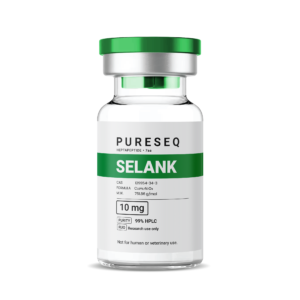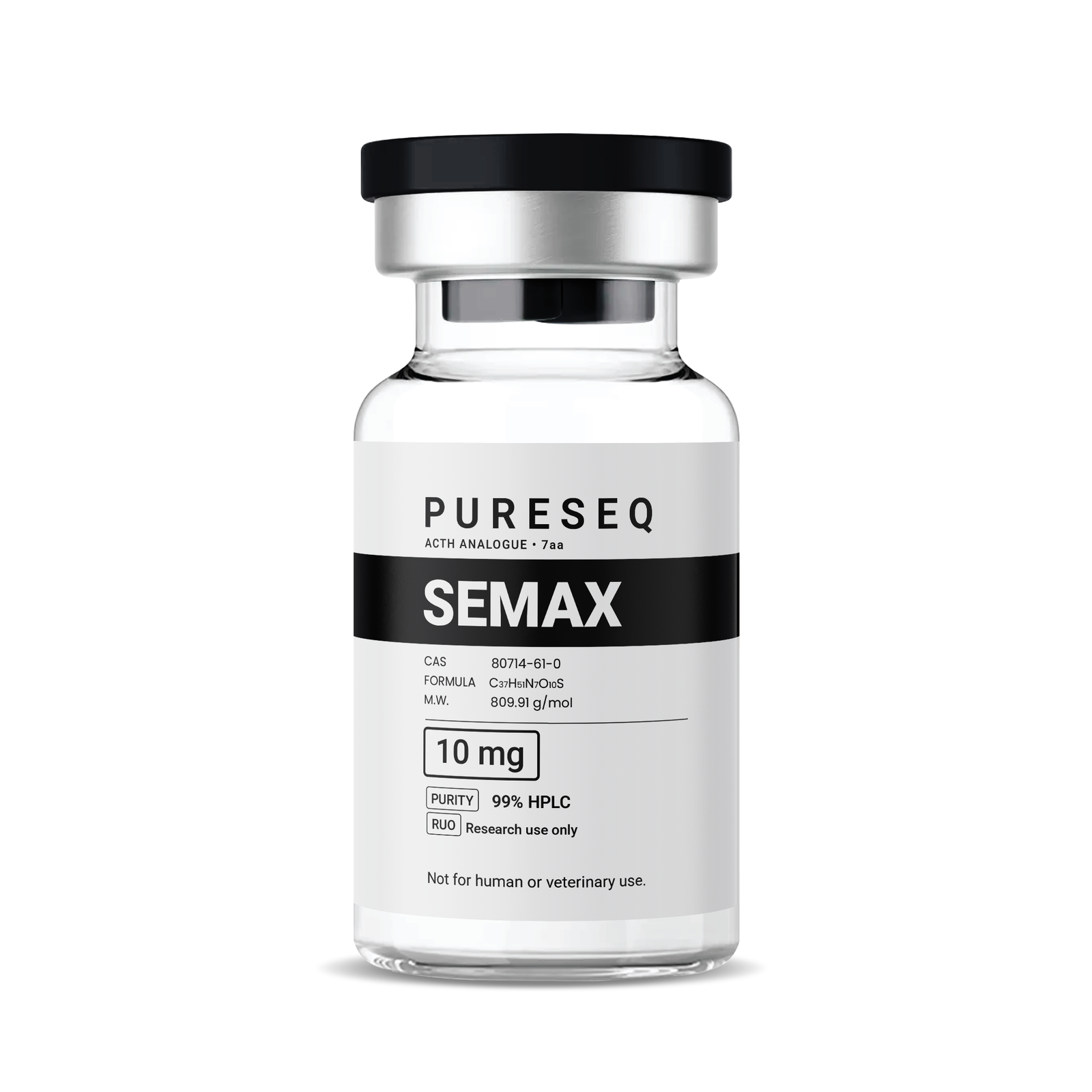
Semax 10mg

Body Protective Compound 10mg 

FOR RESEARCH USE ONLY 

Semax is a synthetic heptapeptide analogue of the ACTH 4-10 fragment. Extensively studied for its nootropic and neuroprotective properties across cognitive function, neurological repair, and stress response modulation.

Quantity
Price
<1
 29.90
1 - 2
 29.90 / vial
3 - 4
 26.91 / vial
5 - 9
 25.91 / vial
10+
 23.92 / vial
× Semax 10mg
Category:

>98%

Purity HPLC

COA

Every batch

EU

Fulfilment

Discreet

Shipping

Overview

Semax (Met-Glu-His-Phe-Pro-Gly-Pro) is a stabilised analogue of the ACTH 4-10 fragment, engineered to resist enzymatic degradation while retaining and amplifying the neurological activity of its parent sequence. Unlike ACTH itself, Semax carries no hormonal activity — its effects are confined to the central nervous system.

Research has focused primarily on its ability to upregulate brain-derived neurotrophic factor (BDNF) and nerve growth factor (NGF), two key proteins responsible for neuronal survival, synaptic plasticity, and cognitive performance. Studies have also documented significant effects on dopaminergic and serotonergic transmission.

Semax has been approved as a pharmaceutical drug in Russia and Ukraine for the treatment of stroke, transient ischaemic attacks, and cognitive impairment, making it one of the few peptides in this category with an established clinical history.

Key research areas include:
– BDNF and NGF upregulation
– Cognitive enhancement and memory consolidation
– Neuroprotection following ischaemic injury
– Dopaminergic and serotonergic modulation
– Anxiety and stress response regulation
– Attention and focus enhancement

RESEARCH & MECHANISM
      1. BDNF & NGF Upregulation
        Semax has been shown to significantly increase expression of BDNF and NGF in the hippocampus and cortex. These neurotrophins play a critical role in synaptic plasticity, long-term potentiation, and neuronal survival, providing a mechanistic basis for the cognitive effects observed in research models.
      2.  Neuroprotection
        Multiple studies have demonstrated Semax’s ability to reduce neuronal death following ischaemic injury. It suppresses the expression of pro-inflammatory cytokines and oxidative stress markers in brain tissue, while simultaneously upregulating protective gene expression pathways.
      3. Dopaminergic & Serotonergic Modulation
        Research has documented Semax’s ability to modulate dopamine and serotonin transmission in the prefrontal cortex and limbic system, with implications for mood regulation, motivation, and stress resilience.
      4. Cognitive Performance
        Animal studies have consistently demonstrated improvements in learning speed, memory consolidation, and attention under Semax administration. Effects appear to be mediated primarily through BDNF-dependent pathways in the hippocampus.
      5. Stroke & Ischaemia
        Clinical research conducted in Russia demonstrated significant reduction in neurological deficit scores and accelerated functional recovery in stroke patients treated with Semax, supporting its pharmaceutical approval in that country.

      Key References:
      – Dolotov OV et al. Semax, an analogue of ACTH 4-10, regulates BDNF and NGF expression. J Neurochem. 2006.
      – Gusev EI et al. Neuroprotective effects of Semax in stroke patients. Cerebrovasc Dis. 1997.
      – Inozemtseva LS et al. Semax affects dopaminergic system activity. Bull Exp Biol Med. 2008.

SPECIFICATIONS
ParameterDetail
PeptideSemax (ACTH 4-10 Analogue)
SequenceMet-Glu-His-Phe-Pro-Gly-Pro
Molecular Weight809.91 g/mol
CAS Number80714-61-0
AppearanceWhite lyophilised powder
Purity>99% (HPLC)
Vial Size10mg
Storage-20°C, protect from light and moisture
ReconstitutionBacteriostatic water or sterile saline
Shelf Life24 months (lyophilised) / 30 days (reconstituted, refrigerated)
FormatLyophilised powder, single-use research vial


DISCLAIMER

For research purposes only. Not for human or veterinary use.

>98%

Purity HPLC

COA

Every batch

EU

Fulfilment

Discreet

Shipping

Overview

Semax (Met-Glu-His-Phe-Pro-Gly-Pro) is a stabilised analogue of the ACTH 4-10 fragment, engineered to resist enzymatic degradation while retaining and amplifying the neurological activity of its parent sequence. Unlike ACTH itself, Semax carries no hormonal activity — its effects are confined to the central nervous system.

Research has focused primarily on its ability to upregulate brain-derived neurotrophic factor (BDNF) and nerve growth factor (NGF), two key proteins responsible for neuronal survival, synaptic plasticity, and cognitive performance. Studies have also documented significant effects on dopaminergic and serotonergic transmission.

Semax has been approved as a pharmaceutical drug in Russia and Ukraine for the treatment of stroke, transient ischaemic attacks, and cognitive impairment, making it one of the few peptides in this category with an established clinical history.

Key research areas include:
– BDNF and NGF upregulation
– Cognitive enhancement and memory consolidation
– Neuroprotection following ischaemic injury
– Dopaminergic and serotonergic modulation
– Anxiety and stress response regulation
– Attention and focus enhancement

RESEARCH & MECHANISM
      1. BDNF & NGF Upregulation
        Semax has been shown to significantly increase expression of BDNF and NGF in the hippocampus and cortex. These neurotrophins play a critical role in synaptic plasticity, long-term potentiation, and neuronal survival, providing a mechanistic basis for the cognitive effects observed in research models.
      2.  Neuroprotection
        Multiple studies have demonstrated Semax’s ability to reduce neuronal death following ischaemic injury. It suppresses the expression of pro-inflammatory cytokines and oxidative stress markers in brain tissue, while simultaneously upregulating protective gene expression pathways.
      3. Dopaminergic & Serotonergic Modulation
        Research has documented Semax’s ability to modulate dopamine and serotonin transmission in the prefrontal cortex and limbic system, with implications for mood regulation, motivation, and stress resilience.
      4. Cognitive Performance
        Animal studies have consistently demonstrated improvements in learning speed, memory consolidation, and attention under Semax administration. Effects appear to be mediated primarily through BDNF-dependent pathways in the hippocampus.
      5. Stroke & Ischaemia
        Clinical research conducted in Russia demonstrated significant reduction in neurological deficit scores and accelerated functional recovery in stroke patients treated with Semax, supporting its pharmaceutical approval in that country.

      Key References:
      – Dolotov OV et al. Semax, an analogue of ACTH 4-10, regulates BDNF and NGF expression. J Neurochem. 2006.
      – Gusev EI et al. Neuroprotective effects of Semax in stroke patients. Cerebrovasc Dis. 1997.
      – Inozemtseva LS et al. Semax affects dopaminergic system activity. Bull Exp Biol Med. 2008.

SPECIFICATIONS
ParameterDetail
PeptideSemax (ACTH 4-10 Analogue)
SequenceMet-Glu-His-Phe-Pro-Gly-Pro
Molecular Weight809.91 g/mol
CAS Number80714-61-0
AppearanceWhite lyophilised powder
Purity>99% (HPLC)
Vial Size10mg
Storage-20°C, protect from light and moisture
ReconstitutionBacteriostatic water or sterile saline
Shelf Life24 months (lyophilised) / 30 days (reconstituted, refrigerated)
FormatLyophilised powder, single-use research vial


DISCLAIMER

For research purposes only. Not for human or veterinary use.

>98%

Purity HPLC

COA

Every batch

EU

Fulfilment

Discreet

Shipping

Overview

Semax (Met-Glu-His-Phe-Pro-Gly-Pro) is a stabilised analogue of the ACTH 4-10 fragment, engineered to resist enzymatic degradation while retaining and amplifying the neurological activity of its parent sequence. Unlike ACTH itself, Semax carries no hormonal activity — its effects are confined to the central nervous system.

Research has focused primarily on its ability to upregulate brain-derived neurotrophic factor (BDNF) and nerve growth factor (NGF), two key proteins responsible for neuronal survival, synaptic plasticity, and cognitive performance. Studies have also documented significant effects on dopaminergic and serotonergic transmission.

Semax has been approved as a pharmaceutical drug in Russia and Ukraine for the treatment of stroke, transient ischaemic attacks, and cognitive impairment, making it one of the few peptides in this category with an established clinical history.

Key research areas include:
– BDNF and NGF upregulation
– Cognitive enhancement and memory consolidation
– Neuroprotection following ischaemic injury
– Dopaminergic and serotonergic modulation
– Anxiety and stress response regulation
– Attention and focus enhancement

RESEARCH & MECHANISM
      1. BDNF & NGF Upregulation
        Semax has been shown to significantly increase expression of BDNF and NGF in the hippocampus and cortex. These neurotrophins play a critical role in synaptic plasticity, long-term potentiation, and neuronal survival, providing a mechanistic basis for the cognitive effects observed in research models.
      2.  Neuroprotection
        Multiple studies have demonstrated Semax’s ability to reduce neuronal death following ischaemic injury. It suppresses the expression of pro-inflammatory cytokines and oxidative stress markers in brain tissue, while simultaneously upregulating protective gene expression pathways.
      3. Dopaminergic & Serotonergic Modulation
        Research has documented Semax’s ability to modulate dopamine and serotonin transmission in the prefrontal cortex and limbic system, with implications for mood regulation, motivation, and stress resilience.
      4. Cognitive Performance
        Animal studies have consistently demonstrated improvements in learning speed, memory consolidation, and attention under Semax administration. Effects appear to be mediated primarily through BDNF-dependent pathways in the hippocampus.
      5. Stroke & Ischaemia
        Clinical research conducted in Russia demonstrated significant reduction in neurological deficit scores and accelerated functional recovery in stroke patients treated with Semax, supporting its pharmaceutical approval in that country.

      Key References:
      – Dolotov OV et al. Semax, an analogue of ACTH 4-10, regulates BDNF and NGF expression. J Neurochem. 2006.
      – Gusev EI et al. Neuroprotective effects of Semax in stroke patients. Cerebrovasc Dis. 1997.
      – Inozemtseva LS et al. Semax affects dopaminergic system activity. Bull Exp Biol Med. 2008.

SPECIFICATIONS
ParameterDetail
PeptideSemax (ACTH 4-10 Analogue)
SequenceMet-Glu-His-Phe-Pro-Gly-Pro
Molecular Weight809.91 g/mol
CAS Number80714-61-0
AppearanceWhite lyophilised powder
Purity>99% (HPLC)
Vial Size10mg
Storage-20°C, protect from light and moisture
ReconstitutionBacteriostatic water or sterile saline
Shelf Life24 months (lyophilised) / 30 days (reconstituted, refrigerated)
FormatLyophilised powder, single-use research vial


DISCLAIMER

For research purposes only. Not for human or veterinary use.

>98%

Purity HPLC

COA

Every batch

EU

Fulfilment

Discreet

Shipping

Overview

Semax (Met-Glu-His-Phe-Pro-Gly-Pro) is a stabilised analogue of the ACTH 4-10 fragment, engineered to resist enzymatic degradation while retaining and amplifying the neurological activity of its parent sequence. Unlike ACTH itself, Semax carries no hormonal activity — its effects are confined to the central nervous system.

Research has focused primarily on its ability to upregulate brain-derived neurotrophic factor (BDNF) and nerve growth factor (NGF), two key proteins responsible for neuronal survival, synaptic plasticity, and cognitive performance. Studies have also documented significant effects on dopaminergic and serotonergic transmission.

Semax has been approved as a pharmaceutical drug in Russia and Ukraine for the treatment of stroke, transient ischaemic attacks, and cognitive impairment, making it one of the few peptides in this category with an established clinical history.

Key research areas include:
– BDNF and NGF upregulation
– Cognitive enhancement and memory consolidation
– Neuroprotection following ischaemic injury
– Dopaminergic and serotonergic modulation
– Anxiety and stress response regulation
– Attention and focus enhancement

RESEARCH & MECHANISM
      1. BDNF & NGF Upregulation
        Semax has been shown to significantly increase expression of BDNF and NGF in the hippocampus and cortex. These neurotrophins play a critical role in synaptic plasticity, long-term potentiation, and neuronal survival, providing a mechanistic basis for the cognitive effects observed in research models.
      2.  Neuroprotection
        Multiple studies have demonstrated Semax’s ability to reduce neuronal death following ischaemic injury. It suppresses the expression of pro-inflammatory cytokines and oxidative stress markers in brain tissue, while simultaneously upregulating protective gene expression pathways.
      3. Dopaminergic & Serotonergic Modulation
        Research has documented Semax’s ability to modulate dopamine and serotonin transmission in the prefrontal cortex and limbic system, with implications for mood regulation, motivation, and stress resilience.
      4. Cognitive Performance
        Animal studies have consistently demonstrated improvements in learning speed, memory consolidation, and attention under Semax administration. Effects appear to be mediated primarily through BDNF-dependent pathways in the hippocampus.
      5. Stroke & Ischaemia
        Clinical research conducted in Russia demonstrated significant reduction in neurological deficit scores and accelerated functional recovery in stroke patients treated with Semax, supporting its pharmaceutical approval in that country.

      Key References:
      – Dolotov OV et al. Semax, an analogue of ACTH 4-10, regulates BDNF and NGF expression. J Neurochem. 2006.
      – Gusev EI et al. Neuroprotective effects of Semax in stroke patients. Cerebrovasc Dis. 1997.
      – Inozemtseva LS et al. Semax affects dopaminergic system activity. Bull Exp Biol Med. 2008.

SPECIFICATIONS
ParameterDetail
PeptideSemax (ACTH 4-10 Analogue)
SequenceMet-Glu-His-Phe-Pro-Gly-Pro
Molecular Weight809.91 g/mol
CAS Number80714-61-0
AppearanceWhite lyophilised powder
Purity>99% (HPLC)
Vial Size10mg
Storage-20°C, protect from light and moisture
ReconstitutionBacteriostatic water or sterile saline
Shelf Life24 months (lyophilised) / 30 days (reconstituted, refrigerated)
FormatLyophilised powder, single-use research vial


DISCLAIMER

For research purposes only. Not for human or veterinary use.
Weight

Reviews

There are no reviews yet.

Be the first to review “Semax 10mg”

Your email address will not be published. Required fields are marked *

Semax  10mgSemax 10mg
 29.90
Quantity
Price
<1
 29.90
1 - 2
 29.90 / vial
3 - 4
 26.91 / vial
5 - 9
 25.91 / vial
10+
 23.92 / vial
× Semax 10mg
Scroll to Top