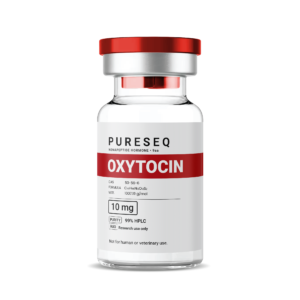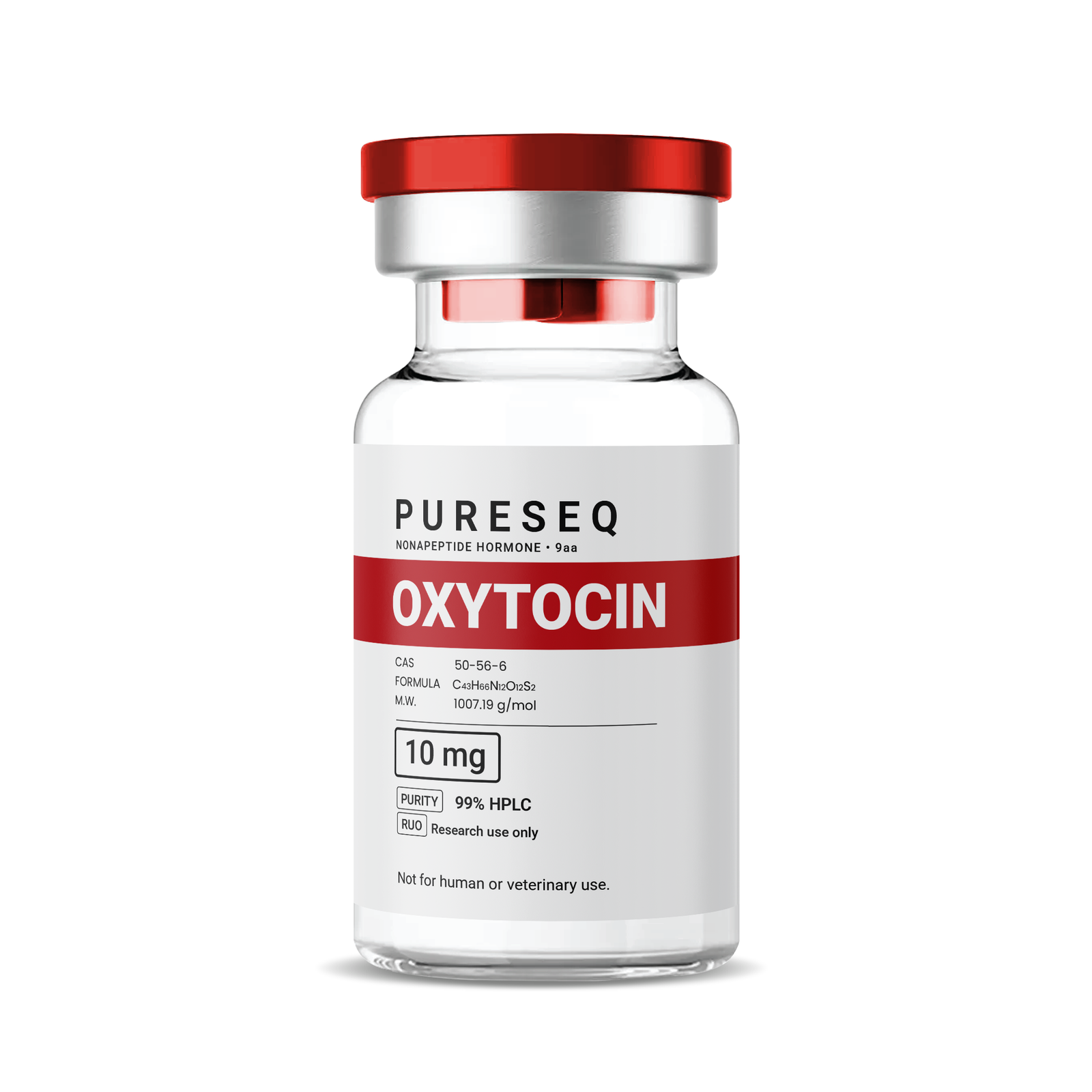
Oxytocin 10mg

Body Protective Compound 10mg 

FOR RESEARCH USE ONLY 

Oxytocin is a naturally occurring nonapeptide hormone produced in the hypothalamus. Extensively studied for its roles in social bonding, stress response modulation, and a broad range of peripheral physiological effects including
cardiovascular, gastrointestinal, and immune function.

Quantity
Price
<1
 34.90
1 - 2
 34.90 / vial
3 - 4
 31.41 / vial
5 - 9
 29.66 / vial
10+
 27.92 / vial
× Oxytocin 10mg
Category:

>98%

Purity HPLC

COA

Every batch

EU

Fulfilment

Discreet

Shipping

Overview

Oxytocin (Cys-Tyr-Ile-Gln-Asn-Cys-Pro-Leu-Gly-NH2) is a nine-amino acid peptide released from the posterior pituitary in response to social interaction, touch, and physiological triggers. It acts on a single G-protein coupled receptor (OXTR) distributed throughout the brain and peripheral tissues.

Beyond its established role in reproductive physiology, research has expanded substantially into oxytocin’s effects on social cognition, anxiety, pain modulation, gut function, and metabolic regulation. The breadth of its receptor distribution makes it one of the more pleiotropic peptides currently under active investigation.

Of particular research interest is oxytocin’s interaction with the autonomic nervous system and its anti-inflammatory effects at peripheral tissue sites, which have been documented independently of its central actions.

Key research areas include:
– Social bonding and prosocial behaviour
– Anxiety and stress response modulation
– Pain perception and analgesic effects
– Gastrointestinal motility and gut-brain axis
– Anti-inflammatory activity
– Metabolic regulation and appetite

RESEARCH & MECHANISM
      1. Social Cognition & Bonding
        Oxytocin’s role in facilitating social recognition, trust, and bonding has been extensively characterised in both animal and human studies. Central administration consistently increases prosocial behaviour and social memory in research models.
      2. Anxiety & Stress Modulation
        Research has documented oxytocin’s anxiolytic effects via modulation of the HPA axis and amygdala activity. It reduces cortisol responses to psychosocial stress in animal models and has been studied in clinical anxiety research.
      3. Pain Modulation
        Oxytocin has demonstrated analgesic effects in multiple preclinical models, acting through both central and spinal mechanisms. Its anti-nociceptive activity has been documented across inflammatory and neuropathic pain models.
      4. Gastrointestinal Effects
        Oxytocin receptors are expressed throughout the gastrointestinal tract. Research has documented effects on gut motility, intestinal inflammation, and the gut-brain axis, with  implications for GI disorder models.
      5. Anti-Inflammatory Activity
        Peripheral oxytocin receptor activation has been shown to reduce pro-inflammatory cytokine expression and modulate immune cell activity, supporting a role in systemic inflammatory models beyond its central effects.

      Key References:
      – Meyer-Lindenberg A et al. Oxytocin and vasopressin in the human brain. Nat Rev Neurosci. 2011.
      – Louvel D et al. Oxytocin in irritable bowel syndrome. Gut. 1996.
      – Szeto A et al. Oxytocin attenuates NADPH-dependent superoxide activity. Am J Physiol. 2008.

SPECIFICATIONS
ParameterDetail
PeptideOxytocin (Nonapeptide Hormone)
SequenceCys-Tyr-Ile-Gln-Asn-Cys-Pro-Leu-Gly-NH2
Molecular Weight1007.19 g/mol
CAS Number 50-56-6
AppearanceWhite lyophilised powder
Purity>99% (HPLC)
Vial Size10mg
Storage-20°C, protect from light and moisture
ReconstitutionBacteriostatic water or sterile saline
Shelf Life24 months (lyophilised) / 30 days (reconstituted, refrigerated)
FormatLyophilised powder, single-use research vial


DISCLAIMER

For research purposes only. Not for human or veterinary use.

>98%

Purity HPLC

COA

Every batch

EU

Fulfilment

Discreet

Shipping

Overview

Oxytocin (Cys-Tyr-Ile-Gln-Asn-Cys-Pro-Leu-Gly-NH2) is a nine-amino acid peptide released from the posterior pituitary in response to social interaction, touch, and physiological triggers. It acts on a single G-protein coupled receptor (OXTR) distributed throughout the brain and peripheral tissues.

Beyond its established role in reproductive physiology, research has expanded substantially into oxytocin’s effects on social cognition, anxiety, pain modulation, gut function, and metabolic regulation. The breadth of its receptor distribution makes it one of the more pleiotropic peptides currently under active investigation.

Of particular research interest is oxytocin’s interaction with the autonomic nervous system and its anti-inflammatory effects at peripheral tissue sites, which have been documented independently of its central actions.

Key research areas include:
– Social bonding and prosocial behaviour
– Anxiety and stress response modulation
– Pain perception and analgesic effects
– Gastrointestinal motility and gut-brain axis
– Anti-inflammatory activity
– Metabolic regulation and appetite

RESEARCH & MECHANISM
      1. Social Cognition & Bonding
        Oxytocin’s role in facilitating social recognition, trust, and bonding has been extensively characterised in both animal and human studies. Central administration consistently increases prosocial behaviour and social memory in research models.
      2. Anxiety & Stress Modulation
        Research has documented oxytocin’s anxiolytic effects via modulation of the HPA axis and amygdala activity. It reduces cortisol responses to psychosocial stress in animal models and has been studied in clinical anxiety research.
      3. Pain Modulation
        Oxytocin has demonstrated analgesic effects in multiple preclinical models, acting through both central and spinal mechanisms. Its anti-nociceptive activity has been documented across inflammatory and neuropathic pain models.
      4. Gastrointestinal Effects
        Oxytocin receptors are expressed throughout the gastrointestinal tract. Research has documented effects on gut motility, intestinal inflammation, and the gut-brain axis, with  implications for GI disorder models.
      5. Anti-Inflammatory Activity
        Peripheral oxytocin receptor activation has been shown to reduce pro-inflammatory cytokine expression and modulate immune cell activity, supporting a role in systemic inflammatory models beyond its central effects.

      Key References:
      – Meyer-Lindenberg A et al. Oxytocin and vasopressin in the human brain. Nat Rev Neurosci. 2011.
      – Louvel D et al. Oxytocin in irritable bowel syndrome. Gut. 1996.
      – Szeto A et al. Oxytocin attenuates NADPH-dependent superoxide activity. Am J Physiol. 2008.

SPECIFICATIONS
ParameterDetail
PeptideOxytocin (Nonapeptide Hormone)
SequenceCys-Tyr-Ile-Gln-Asn-Cys-Pro-Leu-Gly-NH2
Molecular Weight1007.19 g/mol
CAS Number 50-56-6
AppearanceWhite lyophilised powder
Purity>99% (HPLC)
Vial Size10mg
Storage-20°C, protect from light and moisture
ReconstitutionBacteriostatic water or sterile saline
Shelf Life24 months (lyophilised) / 30 days (reconstituted, refrigerated)
FormatLyophilised powder, single-use research vial


DISCLAIMER

For research purposes only. Not for human or veterinary use.

>98%

Purity HPLC

COA

Every batch

EU

Fulfilment

Discreet

Shipping

Overview

Oxytocin (Cys-Tyr-Ile-Gln-Asn-Cys-Pro-Leu-Gly-NH2) is a nine-amino acid peptide released from the posterior pituitary in response to social interaction, touch, and physiological triggers. It acts on a single G-protein coupled receptor (OXTR) distributed throughout the brain and peripheral tissues.

Beyond its established role in reproductive physiology, research has expanded substantially into oxytocin’s effects on social cognition, anxiety, pain modulation, gut function, and metabolic regulation. The breadth of its receptor distribution makes it one of the more pleiotropic peptides currently under active investigation.

Of particular research interest is oxytocin’s interaction with the autonomic nervous system and its anti-inflammatory effects at peripheral tissue sites, which have been documented independently of its central actions.

Key research areas include:
– Social bonding and prosocial behaviour
– Anxiety and stress response modulation
– Pain perception and analgesic effects
– Gastrointestinal motility and gut-brain axis
– Anti-inflammatory activity
– Metabolic regulation and appetite

RESEARCH & MECHANISM
      1. Social Cognition & Bonding
        Oxytocin’s role in facilitating social recognition, trust, and bonding has been extensively characterised in both animal and human studies. Central administration consistently increases prosocial behaviour and social memory in research models.
      2. Anxiety & Stress Modulation
        Research has documented oxytocin’s anxiolytic effects via modulation of the HPA axis and amygdala activity. It reduces cortisol responses to psychosocial stress in animal models and has been studied in clinical anxiety research.
      3. Pain Modulation
        Oxytocin has demonstrated analgesic effects in multiple preclinical models, acting through both central and spinal mechanisms. Its anti-nociceptive activity has been documented across inflammatory and neuropathic pain models.
      4. Gastrointestinal Effects
        Oxytocin receptors are expressed throughout the gastrointestinal tract. Research has documented effects on gut motility, intestinal inflammation, and the gut-brain axis, with  implications for GI disorder models.
      5. Anti-Inflammatory Activity
        Peripheral oxytocin receptor activation has been shown to reduce pro-inflammatory cytokine expression and modulate immune cell activity, supporting a role in systemic inflammatory models beyond its central effects.

      Key References:
      – Meyer-Lindenberg A et al. Oxytocin and vasopressin in the human brain. Nat Rev Neurosci. 2011.
      – Louvel D et al. Oxytocin in irritable bowel syndrome. Gut. 1996.
      – Szeto A et al. Oxytocin attenuates NADPH-dependent superoxide activity. Am J Physiol. 2008.

SPECIFICATIONS
ParameterDetail
PeptideOxytocin (Nonapeptide Hormone)
SequenceCys-Tyr-Ile-Gln-Asn-Cys-Pro-Leu-Gly-NH2
Molecular Weight1007.19 g/mol
CAS Number 50-56-6
AppearanceWhite lyophilised powder
Purity>99% (HPLC)
Vial Size10mg
Storage-20°C, protect from light and moisture
ReconstitutionBacteriostatic water or sterile saline
Shelf Life24 months (lyophilised) / 30 days (reconstituted, refrigerated)
FormatLyophilised powder, single-use research vial


DISCLAIMER

For research purposes only. Not for human or veterinary use.

>98%

Purity HPLC

COA

Every batch

EU

Fulfilment

Discreet

Shipping

Overview

Oxytocin (Cys-Tyr-Ile-Gln-Asn-Cys-Pro-Leu-Gly-NH2) is a nine-amino acid peptide released from the posterior pituitary in response to social interaction, touch, and physiological triggers. It acts on a single G-protein coupled receptor (OXTR) distributed throughout the brain and peripheral tissues.

Beyond its established role in reproductive physiology, research has expanded substantially into oxytocin’s effects on social cognition, anxiety, pain modulation, gut function, and metabolic regulation. The breadth of its receptor distribution makes it one of the more pleiotropic peptides currently under active investigation.

Of particular research interest is oxytocin’s interaction with the autonomic nervous system and its anti-inflammatory effects at peripheral tissue sites, which have been documented independently of its central actions.

Key research areas include:
– Social bonding and prosocial behaviour
– Anxiety and stress response modulation
– Pain perception and analgesic effects
– Gastrointestinal motility and gut-brain axis
– Anti-inflammatory activity
– Metabolic regulation and appetite

RESEARCH & MECHANISM
      1. Social Cognition & Bonding
        Oxytocin’s role in facilitating social recognition, trust, and bonding has been extensively characterised in both animal and human studies. Central administration consistently increases prosocial behaviour and social memory in research models.
      2. Anxiety & Stress Modulation
        Research has documented oxytocin’s anxiolytic effects via modulation of the HPA axis and amygdala activity. It reduces cortisol responses to psychosocial stress in animal models and has been studied in clinical anxiety research.
      3. Pain Modulation
        Oxytocin has demonstrated analgesic effects in multiple preclinical models, acting through both central and spinal mechanisms. Its anti-nociceptive activity has been documented across inflammatory and neuropathic pain models.
      4. Gastrointestinal Effects
        Oxytocin receptors are expressed throughout the gastrointestinal tract. Research has documented effects on gut motility, intestinal inflammation, and the gut-brain axis, with  implications for GI disorder models.
      5. Anti-Inflammatory Activity
        Peripheral oxytocin receptor activation has been shown to reduce pro-inflammatory cytokine expression and modulate immune cell activity, supporting a role in systemic inflammatory models beyond its central effects.

      Key References:
      – Meyer-Lindenberg A et al. Oxytocin and vasopressin in the human brain. Nat Rev Neurosci. 2011.
      – Louvel D et al. Oxytocin in irritable bowel syndrome. Gut. 1996.
      – Szeto A et al. Oxytocin attenuates NADPH-dependent superoxide activity. Am J Physiol. 2008.

SPECIFICATIONS
ParameterDetail
PeptideOxytocin (Nonapeptide Hormone)
SequenceCys-Tyr-Ile-Gln-Asn-Cys-Pro-Leu-Gly-NH2
Molecular Weight1007.19 g/mol
CAS Number 50-56-6
AppearanceWhite lyophilised powder
Purity>99% (HPLC)
Vial Size10mg
Storage-20°C, protect from light and moisture
ReconstitutionBacteriostatic water or sterile saline
Shelf Life24 months (lyophilised) / 30 days (reconstituted, refrigerated)
FormatLyophilised powder, single-use research vial


DISCLAIMER

For research purposes only. Not for human or veterinary use.
Weight

Reviews

There are no reviews yet.

Be the first to review “Oxytocin 10mg”

Your email address will not be published. Required fields are marked *

Oxytocin 10mgOxytocin 10mg
 34.90
Quantity
Price
<1
 34.90
1 - 2
 34.90 / vial
3 - 4
 31.41 / vial
5 - 9
 29.66 / vial
10+
 27.92 / vial
× Oxytocin 10mg
Scroll to Top