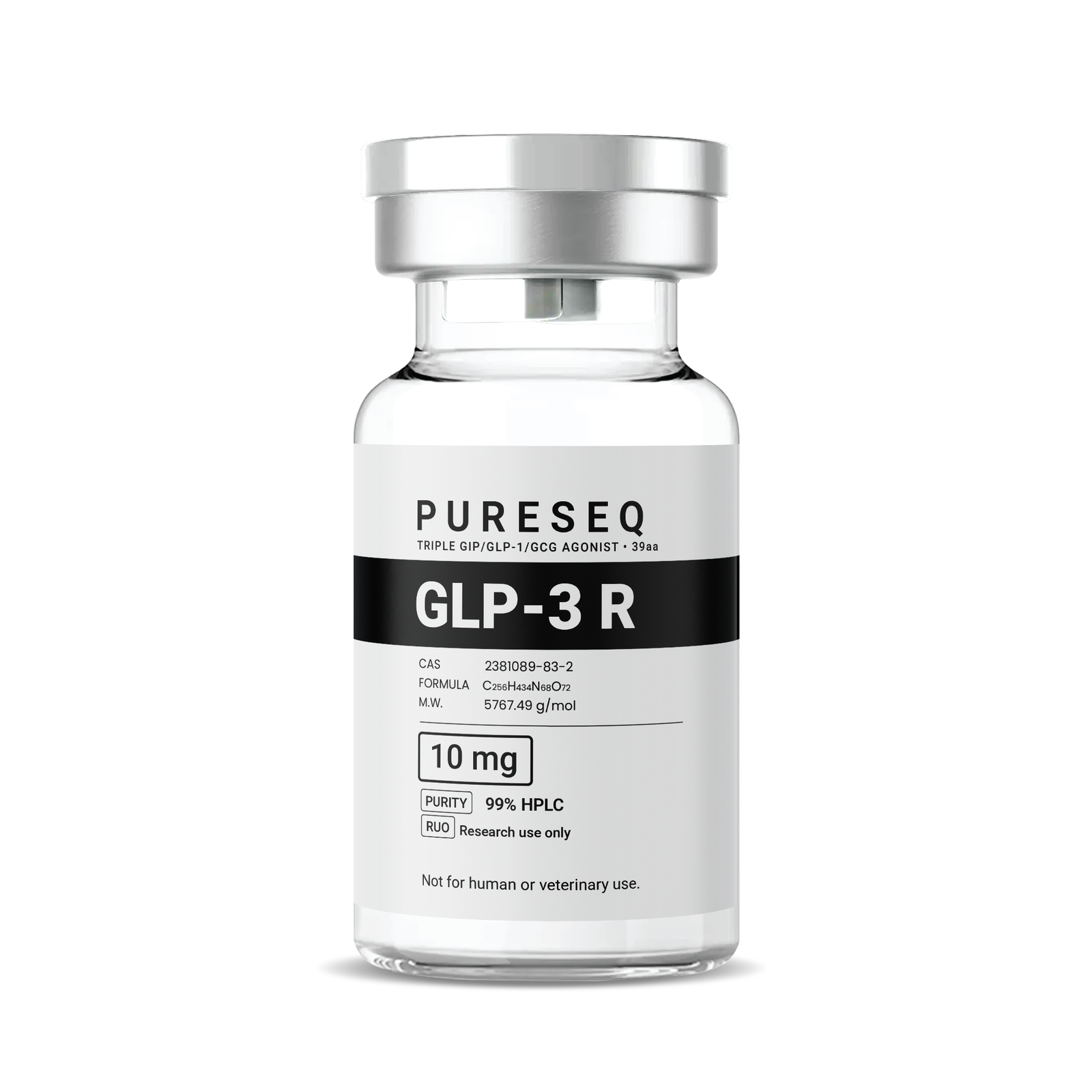
Retatrutide 10mg (GLP-3R)

Body Protective Compound 10mg 

FOR RESEARCH USE ONLY 

GLP-3R is a synthetic 39-amino acid triple receptor agonist targeting GIP, GLP-1, and glucagon receptors simultaneously. Studied for its effects on metabolic regulation, body composition, and appetite signalling across preclinical and early clinical research models.

Quantity
Price
<1
 59.90
1 - 2
 59.90 / vial
3 - 4
 53.91 / vial
5 - 9
 50.91 / vial
10+
 47.92 / vial
× Retatrutide 10mg (GLP-3R)
Category:

>98%

Purity HPLC

COA

Every batch

EU

Fulfilment

Discreet

Shipping

Overview

GLP-3R acts as a simultaneous agonist at three distinct metabolic receptors: the glucose-dependent insulinotropic polypeptide receptor (GIPR), the glucagon-like peptide-1 receptor (GLP-1R), and the glucagon receptor (GCGR). This triple mechanism distinguishes it from dual or single receptor agonists and has produced compelling data in early research.

The GLP-1 component drives insulin secretion and appetite suppression; the GIP component enhances insulin response and may reduce the nausea associated with GLP1 mono-agonism; the glucagon component increases energy expenditure and hepatic fat mobilisation. Together these mechanisms produce a complementary and potent metabolic profile in research models.

Phase 1 and Phase 2 clinical data have demonstrated substantial effects on body weight reduction and metabolic markers, positioning GLP-3R among the most actively researched compounds in metabolic science.

Key research areas include:
– Triple GIP/GLP-1/glucagon receptor agonism
– Body weight regulation and adipose reduction
– Insulin secretion and glucose metabolism
– Hepatic lipid metabolism
– Energy expenditure modulation
– Appetite and satiety signalling

RESEARCH & MECHANISM
      1. Triple Receptor Agonism
        GLP-3R’s simultaneous activation of GIPR, GLP-1R, and GCGR produces complementary metabolic effects that address multiple pathways simultaneously. The glucagon component in particular adds energy expenditure benefits not seen with dual GLP1/GIP agonists.
      2. Appetite & Satiety Regulation
        GLP-1R agonism drives significant reductions in appetite through central and peripheral mechanisms, including slowing of gastric emptying and direct hypothalamic signalling. Research has consistently documented reductions in caloric intake in relevant models.
      3. Glucose Metabolism
        The GIP and GLP-1 components both contribute to glucose-dependent insulin secretion, improving glycaemic control without hypoglycaemic risk at physiological glucose concentrations.
      4. Hepatic Lipid Metabolism
        Glucagon receptor activation promotes hepatic fat oxidation and reduces lipogenesis, making GLP-3R of particular interest in models of hepatic steatosis and metabolic dysfunction.
      5. Body Composition
        Early clinical data have documented substantial reductions in body weight and improvements in lean-to-fat ratios, with effects exceeding those of GLP-1 monoagonists in comparative research.

      Key References:
      – Coskun T et al. Retatrutide (LY3437943), a GIP, GLP-1, and glucagon receptor agonist. Cell Metab. 2022.
      – Jastreboff AM et al. Triple hormone receptor agonist retatrutide for obesity. N Engl J Med. 2023.
      – Finan B et al. Unimolecular dual incretins maximize metabolic benefits. Sci Transl Med. 2013.

SPECIFICATIONS
ParameterDetail
PeptideGLP-3R (Triple GIP/GLP-1/GCG Receptor Agonist)
  
Molecular Weight5767.49 g/mol
CAS Number2381089-83-2
AppearanceWhite lyophilised powder
Purity>99% (HPLC)
Vial Size10mg
Storage-20°C, protect from light and moisture
ReconstitutionBacteriostatic water or sterile saline
Shelf Life24 months (lyophilised) / 30 days (reconstituted, refrigerated)
FormatLyophilised powder, single-use research vial


DISCLAIMER

For research purposes only. Not for human or veterinary use.

>98%

Purity HPLC

COA

Every batch

EU

Fulfilment

Discreet

Shipping

Overview

GLP-3R acts as a simultaneous agonist at three distinct metabolic receptors: the glucose-dependent insulinotropic polypeptide receptor (GIPR), the glucagon-like peptide-1 receptor (GLP-1R), and the glucagon receptor (GCGR). This triple mechanism distinguishes it from dual or single receptor agonists and has produced compelling data in early research.

The GLP-1 component drives insulin secretion and appetite suppression; the GIP component enhances insulin response and may reduce the nausea associated with GLP1 mono-agonism; the glucagon component increases energy expenditure and hepatic fat mobilisation. Together these mechanisms produce a complementary and potent metabolic profile in research models.

Phase 1 and Phase 2 clinical data have demonstrated substantial effects on body weight reduction and metabolic markers, positioning GLP-3R among the most actively researched compounds in metabolic science.

Key research areas include:
– Triple GIP/GLP-1/glucagon receptor agonism
– Body weight regulation and adipose reduction
– Insulin secretion and glucose metabolism
– Hepatic lipid metabolism
– Energy expenditure modulation
– Appetite and satiety signalling

RESEARCH & MECHANISM
      1. Triple Receptor Agonism
        GLP-3R’s simultaneous activation of GIPR, GLP-1R, and GCGR produces complementary metabolic effects that address multiple pathways simultaneously. The glucagon component in particular adds energy expenditure benefits not seen with dual GLP1/GIP agonists.
      2. Appetite & Satiety Regulation
        GLP-1R agonism drives significant reductions in appetite through central and peripheral mechanisms, including slowing of gastric emptying and direct hypothalamic signalling. Research has consistently documented reductions in caloric intake in relevant models.
      3. Glucose Metabolism
        The GIP and GLP-1 components both contribute to glucose-dependent insulin secretion, improving glycaemic control without hypoglycaemic risk at physiological glucose concentrations.
      4. Hepatic Lipid Metabolism
        Glucagon receptor activation promotes hepatic fat oxidation and reduces lipogenesis, making GLP-3R of particular interest in models of hepatic steatosis and metabolic dysfunction.
      5. Body Composition
        Early clinical data have documented substantial reductions in body weight and improvements in lean-to-fat ratios, with effects exceeding those of GLP-1 monoagonists in comparative research.

      Key References:
      – Coskun T et al. Retatrutide (LY3437943), a GIP, GLP-1, and glucagon receptor agonist. Cell Metab. 2022.
      – Jastreboff AM et al. Triple hormone receptor agonist retatrutide for obesity. N Engl J Med. 2023.
      – Finan B et al. Unimolecular dual incretins maximize metabolic benefits. Sci Transl Med. 2013.

SPECIFICATIONS
ParameterDetail
PeptideGLP-3R (Triple GIP/GLP-1/GCG Receptor Agonist)
  
Molecular Weight5767.49 g/mol
CAS Number2381089-83-2
AppearanceWhite lyophilised powder
Purity>99% (HPLC)
Vial Size10mg
Storage-20°C, protect from light and moisture
ReconstitutionBacteriostatic water or sterile saline
Shelf Life24 months (lyophilised) / 30 days (reconstituted, refrigerated)
FormatLyophilised powder, single-use research vial


DISCLAIMER

For research purposes only. Not for human or veterinary use.

>98%

Purity HPLC

COA

Every batch

EU

Fulfilment

Discreet

Shipping

Overview

GLP-3R acts as a simultaneous agonist at three distinct metabolic receptors: the glucose-dependent insulinotropic polypeptide receptor (GIPR), the glucagon-like peptide-1 receptor (GLP-1R), and the glucagon receptor (GCGR). This triple mechanism distinguishes it from dual or single receptor agonists and has produced compelling data in early research.

The GLP-1 component drives insulin secretion and appetite suppression; the GIP component enhances insulin response and may reduce the nausea associated with GLP1 mono-agonism; the glucagon component increases energy expenditure and hepatic fat mobilisation. Together these mechanisms produce a complementary and potent metabolic profile in research models.

Phase 1 and Phase 2 clinical data have demonstrated substantial effects on body weight reduction and metabolic markers, positioning GLP-3R among the most actively researched compounds in metabolic science.

Key research areas include:
– Triple GIP/GLP-1/glucagon receptor agonism
– Body weight regulation and adipose reduction
– Insulin secretion and glucose metabolism
– Hepatic lipid metabolism
– Energy expenditure modulation
– Appetite and satiety signalling

RESEARCH & MECHANISM
      1. Triple Receptor Agonism
        GLP-3R’s simultaneous activation of GIPR, GLP-1R, and GCGR produces complementary metabolic effects that address multiple pathways simultaneously. The glucagon component in particular adds energy expenditure benefits not seen with dual GLP1/GIP agonists.
      2. Appetite & Satiety Regulation
        GLP-1R agonism drives significant reductions in appetite through central and peripheral mechanisms, including slowing of gastric emptying and direct hypothalamic signalling. Research has consistently documented reductions in caloric intake in relevant models.
      3. Glucose Metabolism
        The GIP and GLP-1 components both contribute to glucose-dependent insulin secretion, improving glycaemic control without hypoglycaemic risk at physiological glucose concentrations.
      4. Hepatic Lipid Metabolism
        Glucagon receptor activation promotes hepatic fat oxidation and reduces lipogenesis, making GLP-3R of particular interest in models of hepatic steatosis and metabolic dysfunction.
      5. Body Composition
        Early clinical data have documented substantial reductions in body weight and improvements in lean-to-fat ratios, with effects exceeding those of GLP-1 monoagonists in comparative research.

      Key References:
      – Coskun T et al. Retatrutide (LY3437943), a GIP, GLP-1, and glucagon receptor agonist. Cell Metab. 2022.
      – Jastreboff AM et al. Triple hormone receptor agonist retatrutide for obesity. N Engl J Med. 2023.
      – Finan B et al. Unimolecular dual incretins maximize metabolic benefits. Sci Transl Med. 2013.

SPECIFICATIONS
ParameterDetail
PeptideGLP-3R (Triple GIP/GLP-1/GCG Receptor Agonist)
  
Molecular Weight5767.49 g/mol
CAS Number2381089-83-2
AppearanceWhite lyophilised powder
Purity>99% (HPLC)
Vial Size10mg
Storage-20°C, protect from light and moisture
ReconstitutionBacteriostatic water or sterile saline
Shelf Life24 months (lyophilised) / 30 days (reconstituted, refrigerated)
FormatLyophilised powder, single-use research vial


DISCLAIMER

For research purposes only. Not for human or veterinary use.

>98%

Purity HPLC

COA

Every batch

EU

Fulfilment

Discreet

Shipping

Overview

GLP-3R acts as a simultaneous agonist at three distinct metabolic receptors: the glucose-dependent insulinotropic polypeptide receptor (GIPR), the glucagon-like peptide-1 receptor (GLP-1R), and the glucagon receptor (GCGR). This triple mechanism distinguishes it from dual or single receptor agonists and has produced compelling data in early research.

The GLP-1 component drives insulin secretion and appetite suppression; the GIP component enhances insulin response and may reduce the nausea associated with GLP1 mono-agonism; the glucagon component increases energy expenditure and hepatic fat mobilisation. Together these mechanisms produce a complementary and potent metabolic profile in research models.

Phase 1 and Phase 2 clinical data have demonstrated substantial effects on body weight reduction and metabolic markers, positioning GLP-3R among the most actively researched compounds in metabolic science.

Key research areas include:
– Triple GIP/GLP-1/glucagon receptor agonism
– Body weight regulation and adipose reduction
– Insulin secretion and glucose metabolism
– Hepatic lipid metabolism
– Energy expenditure modulation
– Appetite and satiety signalling

RESEARCH & MECHANISM
      1. Triple Receptor Agonism
        GLP-3R’s simultaneous activation of GIPR, GLP-1R, and GCGR produces complementary metabolic effects that address multiple pathways simultaneously. The glucagon component in particular adds energy expenditure benefits not seen with dual GLP1/GIP agonists.
      2. Appetite & Satiety Regulation
        GLP-1R agonism drives significant reductions in appetite through central and peripheral mechanisms, including slowing of gastric emptying and direct hypothalamic signalling. Research has consistently documented reductions in caloric intake in relevant models.
      3. Glucose Metabolism
        The GIP and GLP-1 components both contribute to glucose-dependent insulin secretion, improving glycaemic control without hypoglycaemic risk at physiological glucose concentrations.
      4. Hepatic Lipid Metabolism
        Glucagon receptor activation promotes hepatic fat oxidation and reduces lipogenesis, making GLP-3R of particular interest in models of hepatic steatosis and metabolic dysfunction.
      5. Body Composition
        Early clinical data have documented substantial reductions in body weight and improvements in lean-to-fat ratios, with effects exceeding those of GLP-1 monoagonists in comparative research.

      Key References:
      – Coskun T et al. Retatrutide (LY3437943), a GIP, GLP-1, and glucagon receptor agonist. Cell Metab. 2022.
      – Jastreboff AM et al. Triple hormone receptor agonist retatrutide for obesity. N Engl J Med. 2023.
      – Finan B et al. Unimolecular dual incretins maximize metabolic benefits. Sci Transl Med. 2013.

SPECIFICATIONS
ParameterDetail
PeptideGLP-3R (Triple GIP/GLP-1/GCG Receptor Agonist)
  
Molecular Weight5767.49 g/mol
CAS Number2381089-83-2
AppearanceWhite lyophilised powder
Purity>99% (HPLC)
Vial Size10mg
Storage-20°C, protect from light and moisture
ReconstitutionBacteriostatic water or sterile saline
Shelf Life24 months (lyophilised) / 30 days (reconstituted, refrigerated)
FormatLyophilised powder, single-use research vial


DISCLAIMER

For research purposes only. Not for human or veterinary use.
Weight

Reviews

There are no reviews yet.

Be the first to review “Retatrutide 10mg (GLP-3R)”

Your email address will not be published. Required fields are marked *

Retatrutide 10mg (GLP-3R)Retatrutide 10mg (GLP-3R)
 59.90
Quantity
Price
<1
 59.90
1 - 2
 59.90 / vial
3 - 4
 53.91 / vial
5 - 9
 50.91 / vial
10+
 47.92 / vial
× Retatrutide 10mg (GLP-3R)
Scroll to Top