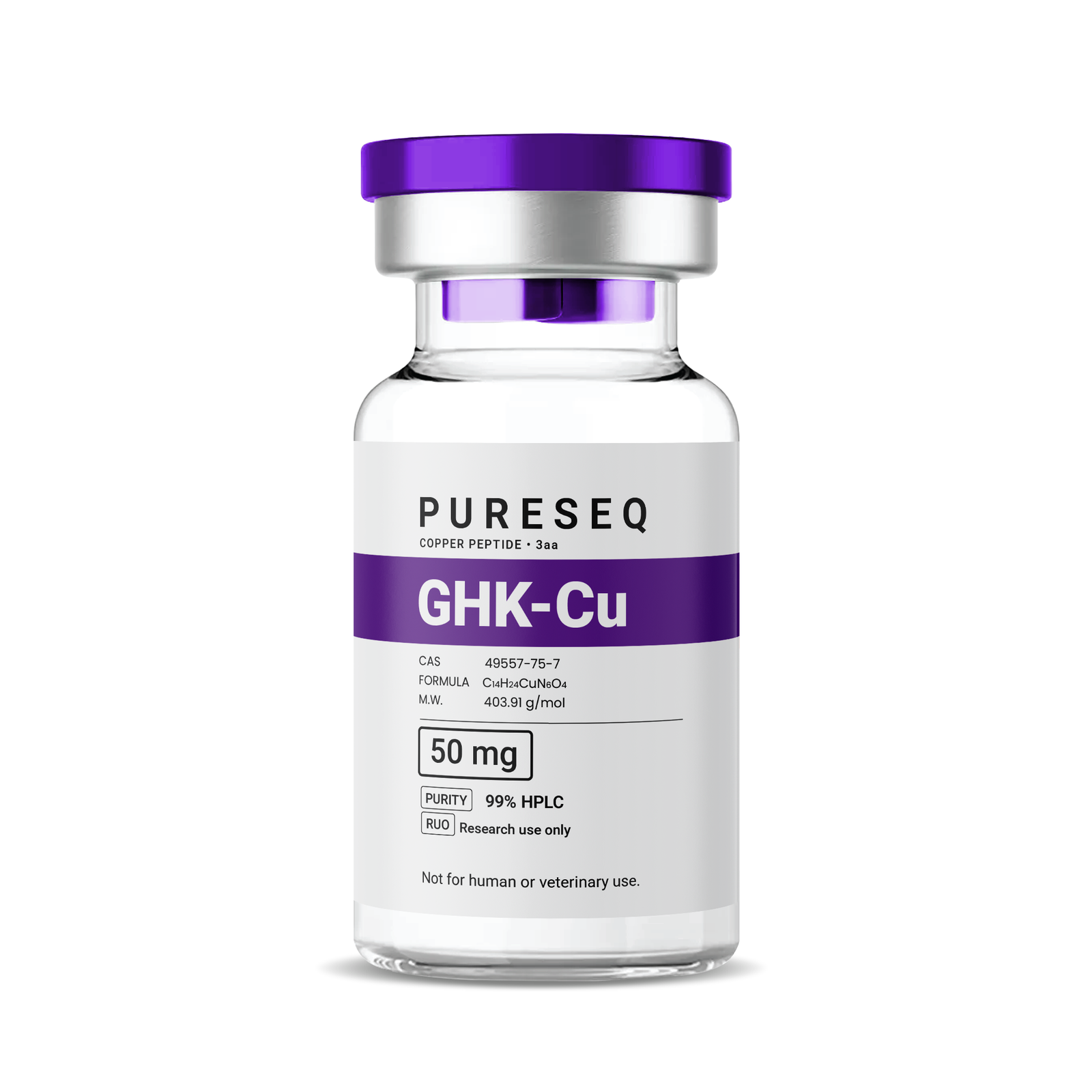
GHK-Cu 50mg

Body Protective Compound 10mg 

FOR RESEARCH USE ONLY 

GHK-Cu is a naturally occurring copper peptide complex consisting of the tripeptide glycyl-L-histidyl-L-lysine bound to a copper ion. Extensively studied for its regenerative, anti-inflammatory, and tissue remodelling properties across skin, wound healing, and systemic repair models.

Quantity
Price
<1
 29.90
1 - 2
 29.90 / vial
3 - 4
 26.91 / vial
5 - 9
 25.91 / vial
10+
 23.92 / vial
× GHK-Cu 50mg
Category:

>98%

Purity HPLC

COA

Every batch

EU

Fulfilment

Discreet

Shipping

Overview

GHK-Cu (Gly-His-Lys:Cu2+) was first isolated from human plasma in 1973 and has since become one of the most extensively characterised copper peptides in biomedical research. Its plasma concentration declines significantly with age, a finding that has driven substantial interest in its role in tissue maintenance and regeneration.

Research has demonstrated GHK-Cu’s ability to activate a broad range of repair and remodelling processes, including collagen and glycosaminoglycan synthesis, angiogenesis, anti-inflammatory signalling, and antioxidant gene expression. It has also been shown to modulate over 4,000 human genes in a direction associated with tissue health and repair.

GHK-Cu’s broad genomic activity — documented through gene array studies — distinguishes it from more targeted peptides and positions it as a systemic regulatory compound with wide-ranging research applications.

Key research areas include:
– Collagen and extracellular matrix synthesis
– Wound healing and skin repair
– Anti-inflammatory and antioxidant activity
– Angiogenesis
– Neuroprotection and nerve regeneration
– Gene expression modulation

RESEARCH & MECHANISM
      1. Collagen Synthesis & Skin Remodelling
        GHK-Cu has been shown to stimulate synthesis of collagen, elastin, and glycosaminoglycans in fibroblasts, with studies documenting significant improvements in skin thickness, firmness, and wound closure rates across both in vitro and animal models.
      2. Gene Expression Modulation
        Gene array studies have demonstrated that GHK-Cu modulates expression of over 4,000 human genes, predominantly in a direction associated with tissue repair, reduced inflammation, and metabolic health. This broad genomic activity is unique among short peptides.
      3. Anti-Inflammatory & Antioxidant Activity
        GHK-Cu consistently reduces expression of pro-inflammatory cytokines and upregulates antioxidant defence genes including superoxide dismutase and catalase, providing protection against oxidative damage in tissue repair models.
      4. Angiogenesis
        Studies have documented GHK-Cu’s ability to promote new blood vessel formation, improving vascular supply to damaged or ageing tissue — a key factor in sustained regenerative activity.
      5. Neuroprotection
        Research has explored GHK-Cu’s neuroprotective potential, with studies demonstrating reduction in markers of neurodegeneration and support for nerve growth factor expression in relevant models.

      Key References:
      – Pickart L et al. GHK-Cu and tissue repair. Organogenesis. 2008.
      – Pickart L & Margolina A. Regenerative and protective actions of GHK-Cu peptide. Biomolecules. 2018.
      – Pollard JD et al. Copper tripeptide complex as a modulator of gene expression. J Investig Dermatol. 2005.

SPECIFICATIONS
ParameterDetail
PeptideGHK-Cu (Copper Peptide Complex)
SequenceGly-His-Lys : Cu2+
Molecular Weight403.91 g/mol
CAS Number 49557-75-7
AppearanceBlue lyophilised powder
Purity>99% (HPLC)
Vial Size50mg
Storage-20°C, protect from light and moisture
ReconstitutionBacteriostatic water or sterile saline
Shelf Life24 months (lyophilised) / 30 days (reconstituted, refrigerated)
FormatLyophilised powder, single-use research vial


DISCLAIMER

For research purposes only. Not for human or veterinary use.

>98%

Purity HPLC

COA

Every batch

EU

Fulfilment

Discreet

Shipping

Overview

GHK-Cu (Gly-His-Lys:Cu2+) was first isolated from human plasma in 1973 and has since become one of the most extensively characterised copper peptides in biomedical research. Its plasma concentration declines significantly with age, a finding that has driven substantial interest in its role in tissue maintenance and regeneration.

Research has demonstrated GHK-Cu’s ability to activate a broad range of repair and remodelling processes, including collagen and glycosaminoglycan synthesis, angiogenesis, anti-inflammatory signalling, and antioxidant gene expression. It has also been shown to modulate over 4,000 human genes in a direction associated with tissue health and repair.

GHK-Cu’s broad genomic activity — documented through gene array studies — distinguishes it from more targeted peptides and positions it as a systemic regulatory compound with wide-ranging research applications.

Key research areas include:
– Collagen and extracellular matrix synthesis
– Wound healing and skin repair
– Anti-inflammatory and antioxidant activity
– Angiogenesis
– Neuroprotection and nerve regeneration
– Gene expression modulation

RESEARCH & MECHANISM
      1. Collagen Synthesis & Skin Remodelling
        GHK-Cu has been shown to stimulate synthesis of collagen, elastin, and glycosaminoglycans in fibroblasts, with studies documenting significant improvements in skin thickness, firmness, and wound closure rates across both in vitro and animal models.
      2. Gene Expression Modulation
        Gene array studies have demonstrated that GHK-Cu modulates expression of over 4,000 human genes, predominantly in a direction associated with tissue repair, reduced inflammation, and metabolic health. This broad genomic activity is unique among short peptides.
      3. Anti-Inflammatory & Antioxidant Activity
        GHK-Cu consistently reduces expression of pro-inflammatory cytokines and upregulates antioxidant defence genes including superoxide dismutase and catalase, providing protection against oxidative damage in tissue repair models.
      4. Angiogenesis
        Studies have documented GHK-Cu’s ability to promote new blood vessel formation, improving vascular supply to damaged or ageing tissue — a key factor in sustained regenerative activity.
      5. Neuroprotection
        Research has explored GHK-Cu’s neuroprotective potential, with studies demonstrating reduction in markers of neurodegeneration and support for nerve growth factor expression in relevant models.

      Key References:
      – Pickart L et al. GHK-Cu and tissue repair. Organogenesis. 2008.
      – Pickart L & Margolina A. Regenerative and protective actions of GHK-Cu peptide. Biomolecules. 2018.
      – Pollard JD et al. Copper tripeptide complex as a modulator of gene expression. J Investig Dermatol. 2005.

SPECIFICATIONS
ParameterDetail
PeptideGHK-Cu (Copper Peptide Complex)
SequenceGly-His-Lys : Cu2+
Molecular Weight403.91 g/mol
CAS Number 49557-75-7
AppearanceBlue lyophilised powder
Purity>99% (HPLC)
Vial Size50mg
Storage-20°C, protect from light and moisture
ReconstitutionBacteriostatic water or sterile saline
Shelf Life24 months (lyophilised) / 30 days (reconstituted, refrigerated)
FormatLyophilised powder, single-use research vial


DISCLAIMER

For research purposes only. Not for human or veterinary use.

>98%

Purity HPLC

COA

Every batch

EU

Fulfilment

Discreet

Shipping

Overview

GHK-Cu (Gly-His-Lys:Cu2+) was first isolated from human plasma in 1973 and has since become one of the most extensively characterised copper peptides in biomedical research. Its plasma concentration declines significantly with age, a finding that has driven substantial interest in its role in tissue maintenance and regeneration.

Research has demonstrated GHK-Cu’s ability to activate a broad range of repair and remodelling processes, including collagen and glycosaminoglycan synthesis, angiogenesis, anti-inflammatory signalling, and antioxidant gene expression. It has also been shown to modulate over 4,000 human genes in a direction associated with tissue health and repair.

GHK-Cu’s broad genomic activity — documented through gene array studies — distinguishes it from more targeted peptides and positions it as a systemic regulatory compound with wide-ranging research applications.

Key research areas include:
– Collagen and extracellular matrix synthesis
– Wound healing and skin repair
– Anti-inflammatory and antioxidant activity
– Angiogenesis
– Neuroprotection and nerve regeneration
– Gene expression modulation

RESEARCH & MECHANISM
      1. Collagen Synthesis & Skin Remodelling
        GHK-Cu has been shown to stimulate synthesis of collagen, elastin, and glycosaminoglycans in fibroblasts, with studies documenting significant improvements in skin thickness, firmness, and wound closure rates across both in vitro and animal models.
      2. Gene Expression Modulation
        Gene array studies have demonstrated that GHK-Cu modulates expression of over 4,000 human genes, predominantly in a direction associated with tissue repair, reduced inflammation, and metabolic health. This broad genomic activity is unique among short peptides.
      3. Anti-Inflammatory & Antioxidant Activity
        GHK-Cu consistently reduces expression of pro-inflammatory cytokines and upregulates antioxidant defence genes including superoxide dismutase and catalase, providing protection against oxidative damage in tissue repair models.
      4. Angiogenesis
        Studies have documented GHK-Cu’s ability to promote new blood vessel formation, improving vascular supply to damaged or ageing tissue — a key factor in sustained regenerative activity.
      5. Neuroprotection
        Research has explored GHK-Cu’s neuroprotective potential, with studies demonstrating reduction in markers of neurodegeneration and support for nerve growth factor expression in relevant models.

      Key References:
      – Pickart L et al. GHK-Cu and tissue repair. Organogenesis. 2008.
      – Pickart L & Margolina A. Regenerative and protective actions of GHK-Cu peptide. Biomolecules. 2018.
      – Pollard JD et al. Copper tripeptide complex as a modulator of gene expression. J Investig Dermatol. 2005.

SPECIFICATIONS
ParameterDetail
PeptideGHK-Cu (Copper Peptide Complex)
SequenceGly-His-Lys : Cu2+
Molecular Weight403.91 g/mol
CAS Number 49557-75-7
AppearanceBlue lyophilised powder
Purity>99% (HPLC)
Vial Size50mg
Storage-20°C, protect from light and moisture
ReconstitutionBacteriostatic water or sterile saline
Shelf Life24 months (lyophilised) / 30 days (reconstituted, refrigerated)
FormatLyophilised powder, single-use research vial


DISCLAIMER

For research purposes only. Not for human or veterinary use.

>98%

Purity HPLC

COA

Every batch

EU

Fulfilment

Discreet

Shipping

Overview

GHK-Cu (Gly-His-Lys:Cu2+) was first isolated from human plasma in 1973 and has since become one of the most extensively characterised copper peptides in biomedical research. Its plasma concentration declines significantly with age, a finding that has driven substantial interest in its role in tissue maintenance and regeneration.

Research has demonstrated GHK-Cu’s ability to activate a broad range of repair and remodelling processes, including collagen and glycosaminoglycan synthesis, angiogenesis, anti-inflammatory signalling, and antioxidant gene expression. It has also been shown to modulate over 4,000 human genes in a direction associated with tissue health and repair.

GHK-Cu’s broad genomic activity — documented through gene array studies — distinguishes it from more targeted peptides and positions it as a systemic regulatory compound with wide-ranging research applications.

Key research areas include:
– Collagen and extracellular matrix synthesis
– Wound healing and skin repair
– Anti-inflammatory and antioxidant activity
– Angiogenesis
– Neuroprotection and nerve regeneration
– Gene expression modulation

RESEARCH & MECHANISM
      1. Collagen Synthesis & Skin Remodelling
        GHK-Cu has been shown to stimulate synthesis of collagen, elastin, and glycosaminoglycans in fibroblasts, with studies documenting significant improvements in skin thickness, firmness, and wound closure rates across both in vitro and animal models.
      2. Gene Expression Modulation
        Gene array studies have demonstrated that GHK-Cu modulates expression of over 4,000 human genes, predominantly in a direction associated with tissue repair, reduced inflammation, and metabolic health. This broad genomic activity is unique among short peptides.
      3. Anti-Inflammatory & Antioxidant Activity
        GHK-Cu consistently reduces expression of pro-inflammatory cytokines and upregulates antioxidant defence genes including superoxide dismutase and catalase, providing protection against oxidative damage in tissue repair models.
      4. Angiogenesis
        Studies have documented GHK-Cu’s ability to promote new blood vessel formation, improving vascular supply to damaged or ageing tissue — a key factor in sustained regenerative activity.
      5. Neuroprotection
        Research has explored GHK-Cu’s neuroprotective potential, with studies demonstrating reduction in markers of neurodegeneration and support for nerve growth factor expression in relevant models.

      Key References:
      – Pickart L et al. GHK-Cu and tissue repair. Organogenesis. 2008.
      – Pickart L & Margolina A. Regenerative and protective actions of GHK-Cu peptide. Biomolecules. 2018.
      – Pollard JD et al. Copper tripeptide complex as a modulator of gene expression. J Investig Dermatol. 2005.

SPECIFICATIONS
ParameterDetail
PeptideGHK-Cu (Copper Peptide Complex)
SequenceGly-His-Lys : Cu2+
Molecular Weight403.91 g/mol
CAS Number 49557-75-7
AppearanceBlue lyophilised powder
Purity>99% (HPLC)
Vial Size50mg
Storage-20°C, protect from light and moisture
ReconstitutionBacteriostatic water or sterile saline
Shelf Life24 months (lyophilised) / 30 days (reconstituted, refrigerated)
FormatLyophilised powder, single-use research vial


DISCLAIMER

For research purposes only. Not for human or veterinary use.
Weight

Reviews

There are no reviews yet.

Be the first to review “GHK-Cu 50mg”

Your email address will not be published. Required fields are marked *

GHK-Cu  50mgGHK-Cu 50mg
 29.90
Quantity
Price
<1
 29.90
1 - 2
 29.90 / vial
3 - 4
 26.91 / vial
5 - 9
 25.91 / vial
10+
 23.92 / vial
× GHK-Cu 50mg
Scroll to Top